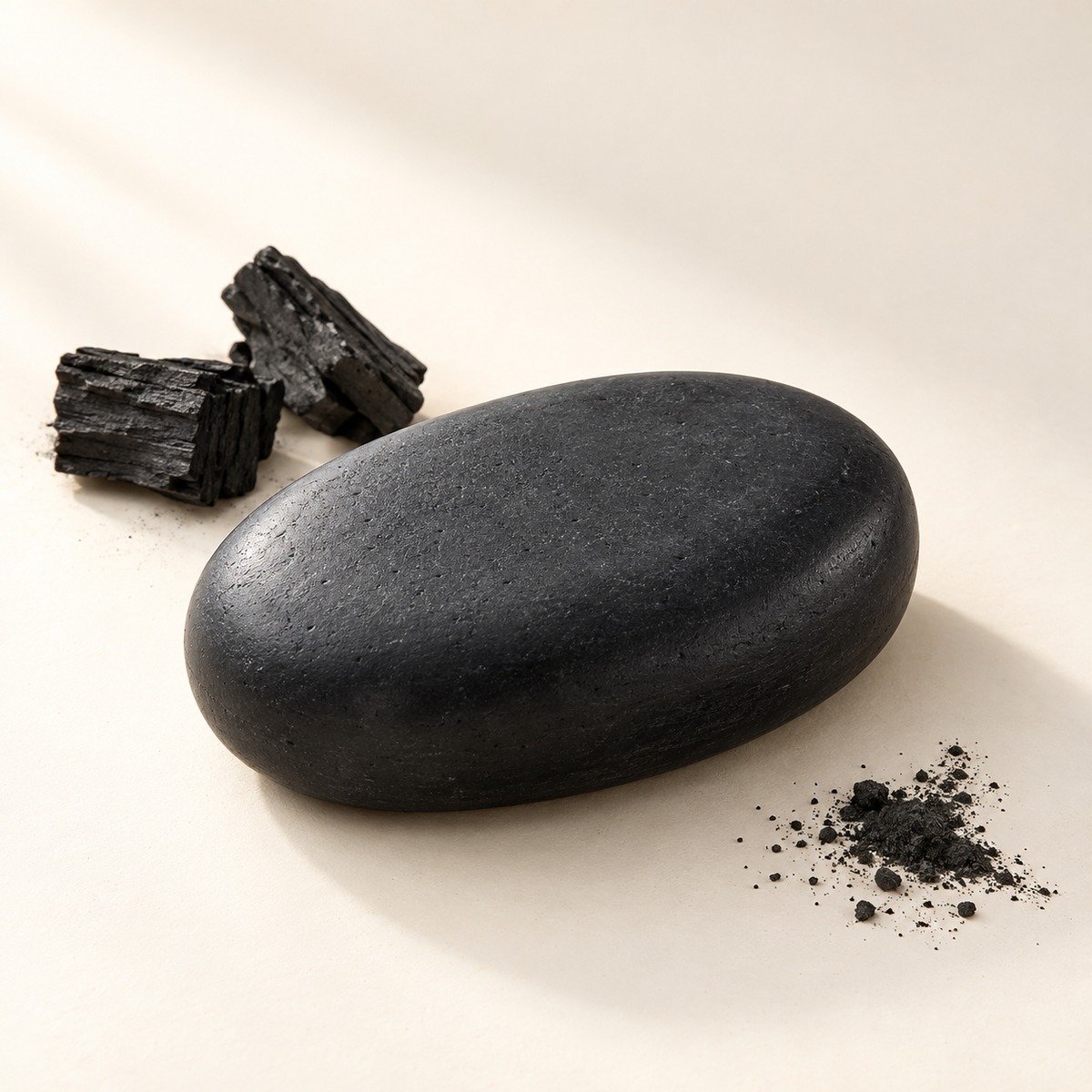
African Black Soap vs Charcoal Soap for Wholesale Buyers
By Saponixsoap
African black soap and charcoal soap can both be dark, yet the names describe different product ideas. Traditional African black soap is associated with West African soap-making practices that use plant-derived ash alkali and oils. Charcoal soap is a soap or cleansing bar formulated with charcoal. Its colour does not establish a traditional process or an African origin.
For a wholesale buyer, this distinction affects the ingredient brief, sourcing story, appearance specification and wording on the pack. Two dark bars should not be treated as interchangeable products simply because they look similar in a photograph.
Understand what makes the products different
| Question | Traditional African black soap | Charcoal soap |
|---|---|---|
| What defines the concept | A traditional formulation and process associated with plant ash alkali and oils | Charcoal included in a specified soap or cleansing-bar formula |
| What needs to be documented | Ingredients, process description and any claimed origin | Full formula information and the identity of the charcoal ingredient |
| What appearance can prove | Colour and texture alone cannot prove authenticity | A black colour alone cannot prove that charcoal is present |
| What shapes the brand story | Verified sourcing and the actual production tradition | The chosen formula, design and supported product attributes |
Ash and charcoal also have different roles. In traditional production, an alkaline solution prepared from plant ash contributes to soap making. Charcoal incorporated into a soap formulation is a separate ingredient choice. An ingredient list containing charcoal should not be used as evidence that the soap was made through an ash-based process.
Recipes and finishing methods vary. Some products are supplied in irregular pieces, while others are formed into consistent bars. A smooth outline does not automatically disprove a traditional production story, just as a rough surface does not confirm one.
Choose the product story before choosing the colour
A retailer building a range around Ghanaian origin needs traceable information about where the product is made and the basis for that statement. A recipe description cannot establish geographical origin on its own. The sourcing record and the description used on the packaging must tell the same story.
A brand developing a dark bar with a clear logo and a coordinated fragrance may be better served by a charcoal soap concept. That decision allows the product to be described through its actual ingredients and presentation, without implying a production tradition that has not been established.
Another buyer may want a dark botanical cleansing bar without making either claim. In that case, the formula and product name should describe what is supplied. Borrowing the African black soap name solely to explain the colour creates an avoidable mismatch between the product and its story.
Separate acceptable variation from a quality problem
When a product intentionally has a varied appearance, define which variation belongs to the design. A reference set showing an agreed range of colour and surface texture is more useful than a single photograph described as rustic.
Other requirements still need their own criteria. Weight, pack fit, fragrance and the condition of the bar on arrival should not disappear into a broad allowance for handmade variation. Surface debris, unwanted hard particles or an unidentified change in odour call for investigation rather than an automatic explanation that traditional soap varies.
For a formed charcoal bar, inspect the consistency of colour, logo detail and the behaviour of the surface during use. If coloured residue is a concern for the intended setting, include contact with the proposed wrapper, soap dish and washing materials in the evaluation. Record what the sample actually does instead of promising that every dark soap behaves the same way.
Read the complete ingredient story
Look beyond a short list of headline botanicals. A complete formula may include fragrance, colour, additional cleansing ingredients or other materials relevant to the intended positioning. The presence of shea butter or a plant ingredient does not establish that the whole product is vegan, fragrance-free or suitable for every skin type.
Performance claims need evidence for the finished bar. Descriptions such as detoxifying, acne treatment or antibacterial should not be inferred from the words black soap or charcoal. Keep the product’s ingredient identity separate from claims about what it does on skin.
A sample review can compare lather, odour, handling, appearance and packaging contact. It cannot verify a country of origin or replace the product documentation supporting the business’s claims.
Match the range to a product you can describe accurately
Before selecting a bar, finish this sentence: this product belongs in our range because it offers a specific ingredient concept, a documented sourcing story or a distinct design. If the answer is only that it is black, the selection needs more work.
For a charcoal-based concept, view the Saponixsoap charcoal soap reference and ingredient and formula discussion page. Use the inquiry page to describe the product you want to develop. For a project requiring African-origin soap, make verified origin records a condition of sourcing.